Do Not Judge My Story by the Chapter You Walked in on
As an embroidery designer and product reviewer, I’ve evaluated thousands of machine embroidery designs. When I first saw “Do Not Judge My Story by the Chapter You Walked in on,” I was immediately struck by its emotional weight and visual simplicity. It’s a quote that speaks to the heart of personal storytelling and the importance of context. But how does it translate to real embroidery projects? Let’s break it down.
The First Impression
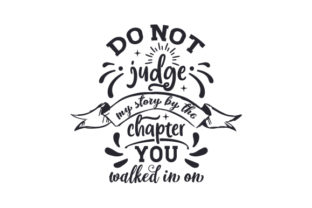
The design has a quiet, thoughtful energy. The text is clean, modern, and easy to read. There’s no unnecessary ornamentation—just a straightforward quote that invites reflection. The layout feels balanced, with enough spacing between words to maintain legibility without feeling empty. It’s the kind of design that works well in both minimalist and more intricate settings.
This isn’t a bold statement or a flashy motif. It’s subtle, which makes it versatile. It can be used as a standalone piece or paired with other elements like flowers, hearts, or abstract shapes. The theme fits well within the Crafts category, especially for quotes, but it also has potential in more commercial applications.
Real-Life Embroidery Scenarios
I imagine using this design on a custom embroidered tote bag for a small business owner who wants to make a statement about authenticity. Or on a sweatshirt for a boutique brand that values individuality. It could also work as a baby item, like a onesie or a blanket, where the message adds a meaningful touch.
For a personalized gift, such as a pillow cover or a kitchen towel, the design brings a sense of warmth and thoughtfulness. It’s not overly complex, so it doesn’t require high stitch counts or advanced techniques. That makes it accessible for hobbyists and beginner embroiderers alike.
But don’t let the simplicity fool you. This design has the potential to elevate a handmade product. When stitched properly, it can add value to a craft business or Etsy listing. It’s the kind of design that tells a story, which is exactly what customers look for in unique, one-of-a-kind items.
Where to Use It Carefully
While “Do Not Judge My Story by the Chapter You Walked in on” is versatile, there are some situations where it may not perform as well. For instance, on small hoop sizes, the design might feel cramped or lose some of its clarity. If you’re working with textured fabrics or thin, stretchy materials, the stitching could be less defined or prone to distortion.
On dark fabric, the design may not stand out as much unless you use a contrasting thread color. Similarly, if you’re planning to use it on a curved surface like a cap or a hat, the corners might not stitch as smoothly as on flat surfaces. Tiny lettering or dense stitch areas could also be problematic if not handled carefully.
If you’re using this as an applique design or combining it with other elements, make sure the overall composition is balanced. Too many layers or too much detail could overwhelm the quote itself.
Impact on Visual Appeal and Customer Perception
When executed well, “Do Not Judge My Story by the Chapter You Walked in on” can enhance the visual appeal of a finished product. It adds a layer of meaning that resonates with customers, making it more than just a decorative element. This is especially important for handmade products, where the story behind the item often plays a big role in the buyer’s decision.
Stitching clarity is key. If the design is too dense or too sparse, it can affect how the message is perceived. A well-balanced stitch density ensures that the quote is readable and visually appealing without looking cluttered or weak.
From a commercial standpoint, this design can help build customer trust. It shows that you care about the message you’re sharing and the quality of your work. For small shop owners or Etsy sellers, this kind of design can differentiate your products from mass-produced alternatives.
Practical Designer Notes
Before using this design in a project, always test it on scrap fabric. This helps you see how the stitches will look on your chosen material and whether any adjustments are needed. Check the thread color contrast—especially if you’re using it on dark or light backgrounds.
Review the stitch density to ensure it matches the fabric you’re using. If the design is too dense, it might cause puckering or stiffness. If it’s too light, it might not hold up well over time.
Confirm the hoop size required for the design. If it’s larger than your machine can handle, consider breaking it into sections or adjusting the layout. Also, inspect small details like corners and lettering to make sure they’re sharp and clear.
Test the design in black and white mockups to see how it looks without color. Compare it against different fabric backgrounds to find the best match. Use proper stabilizer to prevent shifting or distortion, especially on stretchy or delicate fabrics.
Finally, make sure the design is suitable for both personal and commercial projects. Confirm the licensing terms before selling finished items or digital products. This is especially important if you’re using it for a craft business or Etsy store.
Final Thoughts
“Do Not Judge My Story by the Chapter You Walked in on” is a design that carries emotional weight and practical versatility. It’s ideal for custom apparel, personalized gifts, and small business merchandise. With the right approach, it can become a valuable addition to your embroidery project library.
Whether you’re an experienced designer or just starting out, this quote-based design offers a great opportunity to explore the intersection of art, storytelling, and craftsmanship. Just remember to test, adjust, and respect the limitations of your equipment and materials.