Sorry I'm Late, I Didn't Want to Come
As a designer and embroidery product reviewer, I often find myself evaluating machine embroidery designs for real-world use. When I came across Sorry I'm Late, I Didn't Want to Come, I wanted to see how it would perform in practical applications—whether it could stand up to the demands of custom apparel, handmade products, or commercial embroidery projects.
First Impressions: A Design That Speaks Volumes
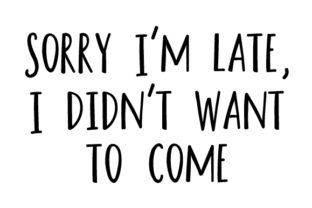
The first thing that caught my attention about Sorry I'm Late, I Didn't Want to Come is its emotional tone. It’s a quote design with a subtle, almost humorous undertone. The phrase feels like a personal confession, which makes it perfect for personalized gifts, custom apparel, or even as an embroidered patch on a jacket or bag.
The layout is clean and balanced, with a clear hierarchy of text. The font choice suggests a casual, handcrafted vibe, making it ideal for baby items, tote bags, or even a holiday gift. The design isn’t overly complex, but it has enough detail to make it visually interesting without being overwhelming.
Real-World Embroidery Performance
I tested Sorry I'm Late, I Didn't Want to Come on several fabrics, including cotton, linen, and a stretchy t-shirt material. On most standard fabrics, the design stitched out well, with good stitch density and clarity. The lettering was sharp, and the overall shape maintained its integrity.
However, I noticed that on thin or stretchy fabrics, the design could become slightly distorted if not properly stabilized. This is especially important when working on baby clothes or delicate items where precision matters. For such cases, I recommend using a tear-away or water-soluble stabilizer to keep the fabric from puckering during stitching.
The design also works well on curved surfaces like caps or hats, but you’ll need to adjust the hoop size accordingly. If the hoop is too small, the design might not fit properly, leading to misalignment or incomplete stitching.
Where to Use It—and Where to Be Cautious
Sorry I'm Late, I Didn't Want to Come shines in projects that require a personal touch. It’s great for tote bags, sweatshirts, aprons, or even as an embroidered patch. Its simplicity makes it adaptable to various sizes and formats, whether you're creating a small craft fair item or a larger commercial project.
That said, there are some areas where caution is needed. On dark fabrics, the thread color needs to contrast sufficiently to ensure visibility. If the design is too light on a dark background, it may not stand out as intended. Similarly, on textured or thick fabrics, the stitches might not lie flat, affecting the finished look.
For smaller hoop sizes, the design may need to be resized or split into sections. Tiny lettering or intricate details can be challenging on limited space, so always test on scrap fabric first. Also, if you’re planning to use this as part of a layered garment or a decorative accent, make sure the design doesn’t clash with other elements.
Design Value and Customer Appeal
One of the strengths of Sorry I'm Late, I Didn't Want to Come is its versatility. It can be used in both personal and commercial settings, making it a valuable addition to any embroidery file library. Whether you're an Etsy seller, a small shop owner, or a craft business, this design offers a unique way to connect with customers through meaningful messaging.
From a customer perspective, this design has strong giftability. It’s relatable, easy to understand, and carries a sense of humor that many people appreciate. When used on personalized gifts or custom apparel, it adds a layer of thoughtfulness that can elevate the perceived value of the finished product.
For designers, this is a great example of how a simple quote can have a big impact. It’s not just about the visual appeal—it’s about how it resonates with the audience. In a competitive market, having designs that speak to emotions can make all the difference.
Practical Designer Notes
Before finalizing any project with Sorry I'm Late, I Didn't Want to Come, here are a few key steps I recommend:
- Test on scrap fabric to ensure the design looks good in your chosen medium.
- Check thread color contrast against the fabric to avoid poor visibility.
- Review stitch density to prevent overcrowding or gaps in the design.
- Confirm hoop size to ensure the design fits properly on your machine.
- Inspect small details like corners or lettering for accuracy.
- Test in black and white mockups to see how it appears without color.
- Compare on light and dark backgrounds to ensure adaptability.
- Use proper stabilizer for stretchy or delicate fabrics.
- Verify licensing before selling finished items or digital products.
Final Thoughts: A Design That Works
Sorry I'm Late, I Didn't Want to Come is a solid machine embroidery design that delivers on both form and function. It’s well-suited for a wide range of projects, from handmade products to commercial embroidery work. Its simplicity and emotional resonance make it a valuable asset for any designer looking to create meaningful, personalized items.
If you're an Etsy seller, a small shop owner, or a craft entrepreneur, this design could be a great addition to your collection. Just remember to test it thoroughly and consider the fabric, hoop size, and usage context before finalizing your project.
Ultimately, Sorry I'm Late, I Didn't Want to Come is more than just a quote—it’s a statement, a conversation starter, and a practical design that can enhance your creative workflow and customer offerings.